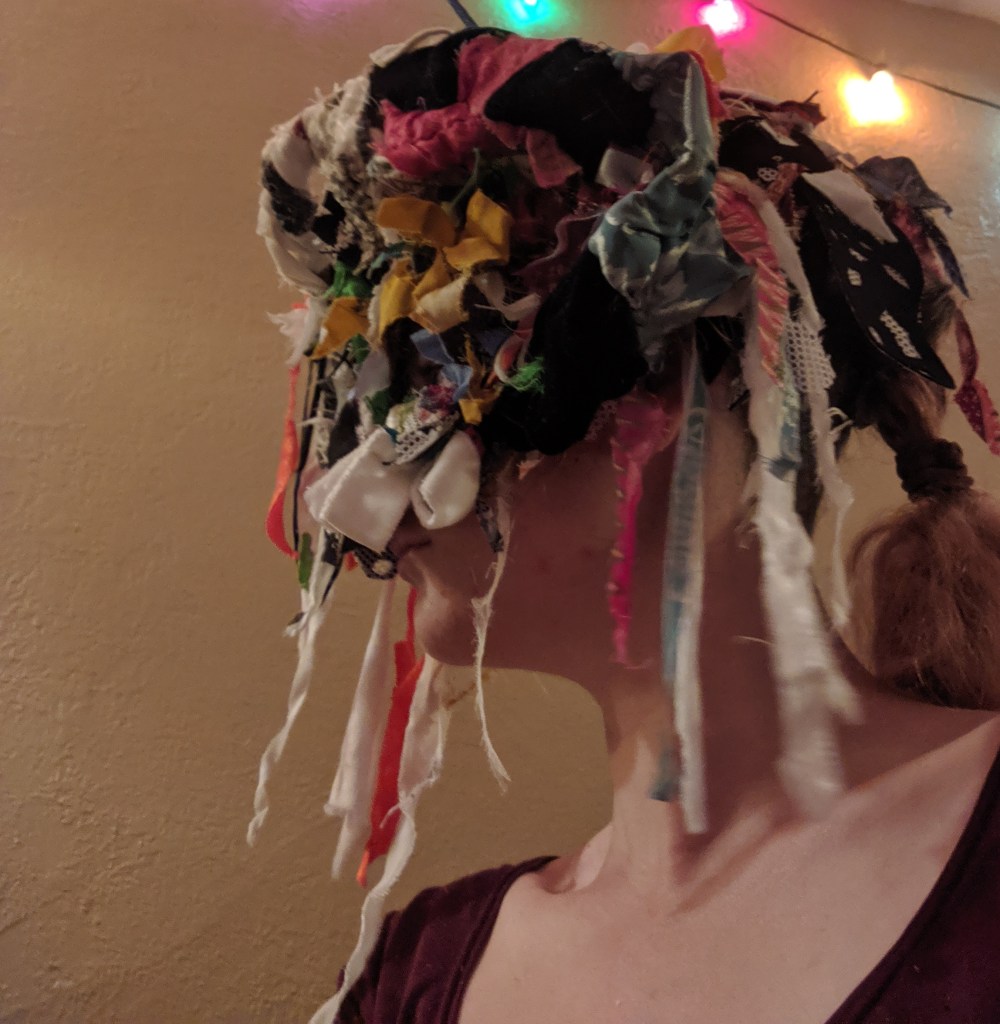
A thread-full person,
I am pulling, unraveling myself.
In the ecstasy of unbecoming,
The clarity of my own tangle
Stripped away and strewn about,
I revel.
I delight.
I draw
Endless fiber from throat laughter
Mending my own chaos with chaos,
Unfurling the swirling mass of my own radiant Nothingness.
Visible mending is the use of embroidery techniques to repair garments in a celebration of preserving a loved possession. It’s also a big FU to the fast fashion industry which is fueled by our insatiable consumerist culture. It’s a step in the right direction towards sustainability and a more environmentally conscious mindset.
I could write about that, but I’ve also been thinking about it as a metaphor for my own personal growth. Because that’s what I do. And if you haven’t figured that out already, then you’re new here and haven’t had more than a 5 minute conversation with me. Welcome! I’m so glad you found my blog.
What does it mean for me to look at the parts of myself that need attention and repair them? How do I do this in a way that structurally brings greater wholeness and honors the journey that caused the wear and tear in the first place. I have a quilt that is older than me, built from scraps of clothing from my parents’ and grandparents’ generations. It is in shreds and mending it in this focused, intentional way could very well take years. I’ve invited others to participate in this mending with me, but no one knows this quilt like I do. There are some tatters that are only mine to mend. Am I still talking about a quilt or am I talking about the traumas of my upbringing and those I inherited from the generations who came before me? I’ve known from a young age that the rage eating away inside, coming out in anxiety and depression, harsh words and stubborn indecision – it didn’t start with me. And I’ve also known, from a young age, that it was up to me to break this cycle. And it’s amazing how the work I’m doing on this quilt is integrating itself with the old fabric. The material I was given is being made new as I carefully weave over holes left by years of use and storage. Am I still talking about my family of origin or the quilt I spent hours studying as a child?
I think about a series of masks I’ve started. I call it the Waste Not series, and I’m still exploring all the significance behind it. My methodology is simple: I take miniscule scraps, smaller than a pocket, some smaller than my thumbnail, and stitch them together to build a textured mask. The end result is not particularly beautiful by conventional standards. As I pull these pieces together, I’m reminded how the original fabric entered into my life. This bright green is from the pillows my grandma helped me make for my freshman dorm room. This red and gold pattern is from the couch cushions on the rattan couch my ex-husband and I had in our first apartment. This fabric was used in 4 different theatrical productions. This is batik from Indonesia. This is from my moth costume, which is from a velvet wedding dress from a costume sale in Indiana, which came from a very small bride who may or may not be alive to this day. And so on. My life is an amalgamation of experiences, of cultures, of desires, of rules, of people. You can go through my journals from junior high on and find references to the feeling that my heart is scattered in pieces around the globe…again and again and again. I didn’t have it as bad as some of my peers, but that’s the world where I formed an identity. I take all these scraps and create an ugly pretty mask – even as a mask it says “This is me. Maybe you’ll see part of yourself here, but you’re getting the whole mess.” Bless the people who stick around to take a closer look, to listen to the stories behind each sliver of fraying fabric, to invest their own swatches into the mix. I’m grateful for them. So many don’t take the time or effort. And I used to be one of those people – ignoring whole, remarkable sections of myself. But I can’t afford to ignore the threads and pieces that make me who I am.
I can’t ignore the threadbare parts, the broken parts, the ill-fitting parts. I’m no longer interested in hiding my imperfections. In creating masks, I’m also exercising a radical dance towards greater presence and authenticity. I am pulling tiny scraps of myself and stitching them back together, tenderly, painstakingly. And so, piece by piece, flow into flow, I reconstruct myself into a new, unique wholeness. It is happening before my eyes, even when I feel the weight of how immense my project will be. And on those heavy days in particular, I must get up from my work to dance.
Come, dance with me.
 Ambs the Bear